Future Smartphones 2030 is honestly the kind of phrase that sounds simple, but when you think about it deeply, it almost feels like we’re stepping into a new chapter of how we live, work, and even talk to people. Today phones look advanced, but real truth is… the things coming by 2030 will make our current devices feel like old calculators. Some people think future phones will be all about camera megapixels only, but honestly, the whole experience is about to change in ways we didn’t imagine.
This guide is not a polished tech brochure. It’s just me talking normally, like how we discuss things with a friend over chai. Let’s break down what’s coming—slowly, casually, and practically.
How Future Smartphones 2030 Will Change Everyday Life
If we really sit and think, the biggest jump in Future Smartphones 2030 isn’t just the design. It’s how naturally they will merge into daily routines. Almost like invisible assistants sitting quietly in your pocket.
Why Future Smartphones 2030 Feels Like a Real Turning Point
To be honest, every decade phones get upgraded, but this time it feels different. Not hype—actual shift. The upcoming models will be less like gadgets and more like personal companions. Almost like the phone “understands” you rather than just “responds” to you.
Key Features Expected by 2030 (Human Explanation)
Below are not robotic predictions. These are practical things already shaping in labs, startups, and research centers:
1. Fully Foldable & Rollable Displays
Phones won’t just fold… they’ll stretch. Imagine pulling your screen sideways like a diary page. Companies are already experimenting. Some people feel it’s unnecessary, but honestly, when you watch a movie or work on docs, it will feel magical.
2. Battery That Lasts Days (Not Hours)
Solid-state batteries are coming. Safer, cooler, faster. Charging your phone once in 3–4 days might become normal.
More Info: BusinessWorld
- AI-Driven Personal Assistants
Not like Siri or Google Assistant—they will feel more human.
They’ll know your patterns, your day flow, and your habits.
It sounds a bit scary, but if privacy is strong, it’s a blessing.
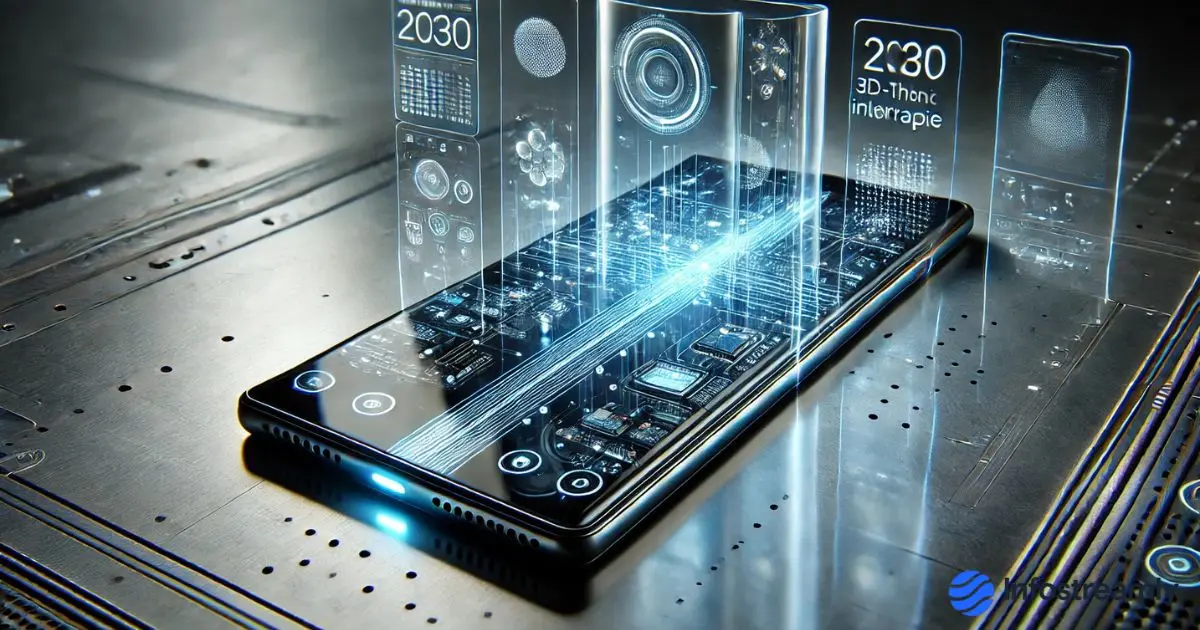
4. Zero-Bezel Transparent Bodies
Some future phones may literally look like a glass slab. You lift it, and a screen appears. You keep it—it looks invisible. Designers are already teasing prototypes.
5. Instant Satellite Calling
No network?
Hill station?
Forest area?
Emergency?
Phones will directly connect to low-orbit satellites.
More Info: GSMA
6. Built-in Hologram Projection
Not like Bollywood sci-fi. Simple holographic pop-ups for maps, video calls, quick UI interactions.
7. Wearable-Level Health Scanning
Phones may check BP, hydration, sleep oxygen, insulin indicators.
Not perfect medical devices, but day-to-day health companions.
8. Fully Localized AI Processing
Everything is processed inside the device → zero cloud dependency → faster and safer.
Also Read: Top 10 Electric Vehicles to Watch in 2025
Everyday Uses That Will Change
1. Education
Students will use AR lessons directly on phone screens.
Physics experiments, anatomy 3D visuals… everything accessible.
2. Work
Remote work becomes simpler.
Your phone can open a desktop mode instantly on any monitor.
3. Shopping
Virtual try-on for clothes, furniture, shoes, gadgets… super accurate.
4. Travel
Maps will show 3D arrows floating on top of the road through holographic projection.
5. Entertainment
Zero-lag cloud gaming.
Theaters-like viewing experience from pocket-size screens.
Conclusion
Honestly, Future Smartphones 2030 is not just about faster processors or shiny bodies. It’s more like phones slowly becoming invisible but more powerful in the background. They’ll do more work with less effort from us.
Some predictions may look bold, but when we see how fast AI, batteries, and displays are evolving… it’s not impossible at all.
Final Verdict
To be honest, whether we like it or not, the jump from today’s smartphones to Future Smartphones 2030 will feel huge. The way we use phones today will look outdated, just like how keypad phones felt after touchscreen phones arrived. So the future is not scary—it’s actually exciting.
Key Takeaways
- By 2030 phones will be more personal than mechanical.
- AI will run locally on devices for privacy.
- Foldable/rollable screens become normal.
- Battery tech will drastically upgrade.
- Smartphones may replace many daily gadgets completely.
FAQs
1. Will future phones replace laptops?
Not fully, but honestly, for most casual users—yes. Desktop modes will be strong enough.
2. Will all phones be foldable by 2030?
Maybe not all, but a big chunk of premium models will be.
3. Are hologram displays really possible?
Yes, simple versions already exist in labs.
4. Will satellite calling cost more?
Most likely yes initially, then slowly it becomes normal.
5. Is AI safe inside phones?
If companies maintain on-device processing, then 90% safer than cloud-based models.

Chandra Mohan Ikkurthi is a tech enthusiast, digital media creator, and founder of InfoStreamly — a platform that simplifies complex topics in technology, business, AI, and innovation. With a passion for sharing knowledge in clear and simple words, he helps readers stay updated with the latest trends shaping our digital world.