Reverse Prompt Trick AI Hack sounds fancy, but honestly, it’s one of those ideas that quietly changes how you use AI once you understand it. I didn’t discover it through some viral thread or paid course. It happened accidentally, out of frustration, when a normal prompt just wasn’t giving me what I wanted. That small moment ended up flipping my entire way of working with AI.
Most people treat AI like a command-following machine. You ask, it answers. Simple. But that’s also why many outputs feel generic, shallow, or “almost right but not quite.” The real power starts when you stop telling AI what to do and instead show it what the final result should look like.
That’s where reverse prompting enters the picture.
What Is the Reverse Prompt Trick AI Hack?
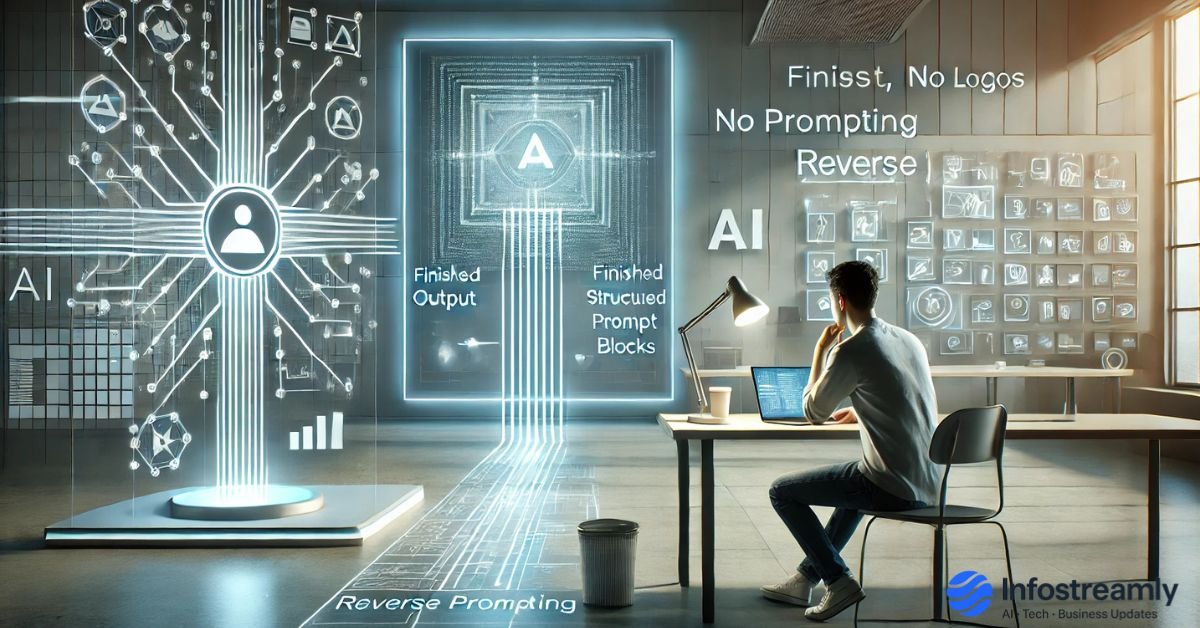
At its core, the Reverse Prompt Trick AI Hack is about working backward. Instead of starting with instructions, you start with outcomes. You give AI a finished example, a desired structure, or even a rough result, and then ask it to reverse-engineer the process.
Think of it like this:
Instead of saying, “Write a perfect blog post about AI,” you say, “Here is a blog post I like. Analyze it and tell me how to create something similar.”
That shift sounds small, but the results feel shockingly smarter.
More Info: OpenAI
Why Normal Prompts Often Fail
Traditional prompts rely heavily on clarity and guesswork. You hope AI understands your tone, depth, audience, and intent. Sometimes it does. Often, it misses the mark.
This happens because AI doesn’t truly “know” what you want. It predicts based on patterns. When your instructions are vague, the prediction becomes generic.
Reverse prompting removes that confusion.
Instead of guessing your expectations, AI studies them.
More Info: Google AI
Why This Trick Works So Well
The Reverse Prompt Trick AI Hack works because AI is incredibly good at analysis. When you give it an example, it doesn’t need to imagine the goal. It can see it clearly.
AI can identify:
- Tone
- Structure
- Complexity
- Writing rhythm
- Information density
Once it understands those elements, recreating or improving them becomes easy.
This is why reverse prompting often feels like the AI suddenly “got smarter,” even though nothing about the model changed.
More Info: OpenAI Help
A Simple Real-World Example
Let’s say you want a high-quality LinkedIn post.
Normal prompt:
“Write a viral LinkedIn post about AI productivity.”
Reverse prompt:
“Here is a LinkedIn post that performed well. Break down why it works and write a new post using the same structure and tone.”
The second one almost always wins.
Not because the AI is creative, but because you removed ambiguity.
Also Read: New UX UI AI Design Tools to Try in 2026
Reverse Prompting in Content Creation
Content creators quietly use this trick more than they admit.
Writers reverse prompt:
- Blog introductions
- Storytelling hooks
- Opinion pieces
Instead of explaining “human tone,” they paste a paragraph they like and say, “Write in this style.”
This is where the Reverse Prompt Trick AI Hack Hack becomes powerful for websites, blogs, and news platforms. It helps maintain consistency without sounding robotic.
Also Read: Perplexity Free AI Agents: 10 New Tools
Using It for Learning, Not Just Writing
Reverse prompting isn’t only about content.
Students use it by pasting solved problems and asking AI to explain the steps backward. Developers use it by sharing working code and asking how it was built. Designers upload layouts and ask for design logic explanations.
In all cases, the AI performs better because it’s analyzing reality, not guessing intent.
Why Nobody Is Talking About It (Yet)
The reason this trick isn’t mainstream is simple: it doesn’t sound impressive.
There’s no flashy name. No “10x productivity” headline. It feels almost too obvious once you understand it.
But many of the most effective techniques work exactly like that. Quiet, practical, and powerful.
As AI tools become more common, users who understand reverse prompting will naturally outperform those who rely on basic commands.
Mistakes to Avoid
Reverse prompting doesn’t mean dumping random content and expecting magic.
Avoid:
- Poor-quality examples
- Conflicting styles in one prompt
- Overloading the AI with too many samples
One clean, clear example works better than five messy ones.
The Bigger Picture
Reverse Prompt Trick AI Hack is not about hacking AI. It’s about communicating better with it.
AI responds best when it knows what “good” looks like. When you define success first, everything else falls into place.
As AI tools evolve, prompting will shift away from commands and move closer to collaboration. Reverse prompting is an early sign of that future.
Final Thoughts
If you’ve ever felt like AI was almost helpful but never perfect, this trick might be what you’re missing.
Stop asking AI to guess your expectations.
Show it instead.
Once you try reverse prompting seriously, going back to normal prompts feels limiting. And that’s usually how you know a technique is worth keeping.
Faq
What is the Reverse Prompt Trick AI Hack?
The Reverse Prompt Trick AI Hack is a technique where you show AI the final result you want and ask it to work backward. Instead of giving instructions first, you give examples or outcomes so the AI understands your expectations clearly.
Is reverse prompting useful for beginners?
Yes. Beginners often struggle with writing “perfect prompts.” Reverse prompting removes that pressure. By sharing an example, even new users can get high-quality outputs without deep prompt engineering knowledge.
Does reverse prompting work with all AI tools?
Most modern AI tools support it. ChatGPT, Claude, Gemini, and similar models respond especially well because they are designed to analyze structure, tone, and patterns from examples.
Is the reverse prompt trick considered cheating or unsafe?
No. It doesn’t break any rules or exploit AI systems. It simply improves communication between you and the AI, similar to giving clearer instructions to a human.
Can reverse prompting improve content quality?
Yes. Reverse prompting often leads to more natural, structured, and human-like content. It reduces generic responses and helps maintain consistent tone and depth across articles or posts.

Chandra Mohan Ikkurthi is a tech enthusiast, digital media creator, and founder of InfoStreamly — a platform that simplifies complex topics in technology, business, AI, and innovation. With a passion for sharing knowledge in clear and simple words, he helps readers stay updated with the latest trends shaping our digital world.