Future Technologies 2030 are evolving faster than ever and redefining how societies, industries, and economies function.
It might surprise you how fast things are changing. The way we live, work, and even think is shifting quicker than anyone expected. In fact, the top 10 future technologies that will change the world by 2030 are already taking shape—quietly blending into our everyday lives while pushing the limits of what’s possible.
Technology isn’t crawling anymore; it’s running full speed—changing how we learn, travel, and even stay healthy. Some of these ideas sound futuristic, but many are already closer than we realize.
So let’s take a closer look at these future technologies that are shaping the world of tomorrow. You’ll see—the future isn’t waiting; it’s already knocking on our door.
1. Artificial Intelligence (AI) Everywhere
Let’s be honest—AI isn’t new anymore. It’s already sitting in your phone, running in your car, and helping doctors make smarter decisions, as noted by the World Economic Forum in its report on the future of AI and automation.
But by 2030, AI won’t just assist us—it’ll understand us. It will recognize emotions, write better software, and even teach new skills. Tools like ChatGPT and Google Gemini will act like personal companions—whether you’re at work, studying, or creating content.
Why it matters: Smarter jobs, better healthcare, personalized learning, and endless creativity powered by machines that never stop learning.
2. Quantum Computing
If you think your laptop is fast, wait till you see a quantum computer in action.
These machines don’t just process data — they bend the rules of physics to solve problems that even supercomputers can’t handle.
Companies like Google, IBM, and Intel are already in a race to make them useful in the real world. Once that happens, everything from climate prediction to medicine design will change forever.
Why it matters: Quantum computers will solve the kind of problems that humans and regular computers simply can’t.
3. Renewable and Fusion Energy
The future of power is clean.
We’re slowly saying goodbye to coal and oil, and moving toward solar panels, wind farms, and the most exciting of all—fusion energy, the same force that powers the sun.
If scientists crack fusion, we’ll have limitless energy with almost zero pollution. Imagine cities that never run out of clean power.
Why it matters: Cleaner air, cheaper electricity, and a safer planet for future generations.
4. Brain–Computer Interfaces
Sounds like science fiction, right? But it’s real.
Scientists are already testing brain chips that let people control computers with their thoughts.
Companies like Neuralink are at the front of this movement. In the coming years, these interfaces could help paralyzed people move again, improve memory, and even let us “think-type” messages faster than ever.
Why it matters: It’s the next big step toward merging humans and machines—and possibly curing disabilities once thought impossible.
5. Advanced Robotics
Robots are stepping out of factories and entering our lives.
Soon, they’ll deliver your food, assist doctors in surgeries, and even take care of the elderly.
These new robots will understand human emotions, learn from their surroundings, and safely work with people side-by-side.
Why it matters: Safer industries, better medical care, and reliable help at home—all from intelligent machines.
6. Space Technology and Colonization
Space isn’t just for astronauts anymore—it’s becoming a business frontier, as highlighted by NASA through its continuous advancements in space exploration and technology innovation.
Companies like SpaceX, Blue Origin, and ISRO are building rockets that can be reused, cutting down the cost of space travel.
By 2030, we might see humans on the Moon again, mining asteroids, or even taking short tourist trips to space. Plus, thousands of satellites will bring internet access to every corner of Earth.
Why it matters: Life beyond Earth, better connectivity, and new industries waiting to be explored.
7. Biotechnology and Genetic Engineering
Medicine is about to get personal—literally.
With technologies like CRISPR, scientists can edit genes to remove diseases before they even appear.
Imagine growing organs in labs, creating food without farms, and living longer, healthier lives. It’s not just possible—it’s already happening in small steps.
Why it matters: Longer life, customized treatments, and a sustainable food system for billions.
8. 6G and Hyper-Connectivity
Just when 5G feels fast, here comes 6G—and it’s going to be wild.
It’s expected to be up to 1,000 times faster, powering everything from holographic video calls to real-time AR classrooms.
By 2030, almost everything—cars, gadgets, homes, and even cities—will stay connected all the time.
Why it matters: Instant communication, smarter cities, and technology that reacts faster than human thought.
9. Metaverse and Extended Reality (XR)
Remember when the internet changed how we worked and played? The metaverse will take that to the next level.
By 2030, you might attend a meeting on Mars (virtually, of course), explore 3D museums, or go shopping in a digital mall from your couch.
This “digital universe” will create millions of new jobs in areas like design, education, and entertainment.
Why it matters: A whole new way to live, learn, and connect—blending reality with imagination.
10. Autonomous Vehicles and Smart Transport
Imagine roads without honking or accidents.
Self-driving cars, delivery drones, and even flying taxis are almost ready for takeoff.
These vehicles will talk to each other, follow traffic rules, and make your daily commute faster, safer, and cleaner.
Why it matters: Fewer accidents, smarter cities, and stress-free travel.
Conclusion
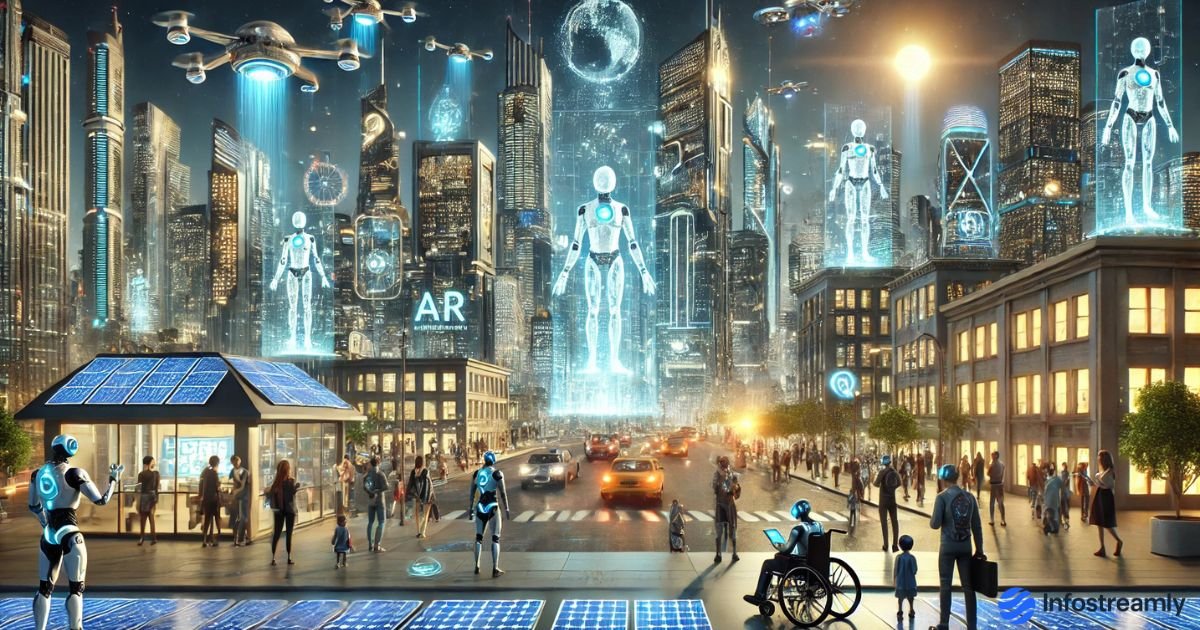
The next decade is going to feel like a movie—full of discoveries, creativity, and dreams turning into reality.
From AI teachers and flying cars to endless clean energy, the future is no longer far away—it’s already unfolding around us.
What we’re seeing today is just the beginning of the Top 10 Future Technologies that will change the world by 2030. These innovations are not just shaping industries—they’re shaping how humanity will live, learn, and grow in the years ahead.
So, stay curious, stay adaptable, and be ready—because the future isn’t coming someday. It’s already here.
Final Verdict
The future isn’t something that’s “coming soon”—it”’s already happening.
Each of these technologies is changing the way we think about life itself. They’ll make our world more connected, more efficient, and maybe even more human.
What’s exciting is that these innovations aren’t about replacing us—they’re about amplifying what we can do.
Key Takeaways
- AI and robotics will redefine how we work and create.
- Quantum and fusion energy will solve massive global challenges.
- 6G, XR, and biotechnology will transform daily life.
- Space tech will expand our reach beyond Earth.
The future is already taking shape – and you’re living through it.
Which of these Top 10 Future Technologies excites you the most?
Drop your thoughts in the comments below, share this article with a friend who loves tech, and follow InfoStreamly for more future-driven stories every week!
FAQs
Q1. Which future technology will impact our lives the most by 2030?
AI and biotechnology are leading the race. They’ll deeply affect how we work, stay healthy, and learn.
Q2. Will quantum computers replace normal ones?
No. They’ll be used for complex research and simulations, while normal computers will still handle everyday tasks.
Q3. Is the Metaverse just a passing trend?
It’s still growing, but major tech companies are investing billions in it. By 2030, it could be as common as social media today.

Chandra Mohan Ikkurthi is a tech enthusiast, digital media creator, and founder of InfoStreamly — a platform that simplifies complex topics in technology, business, AI, and innovation. With a passion for sharing knowledge in clear and simple words, he helps readers stay updated with the latest trends shaping our digital world.