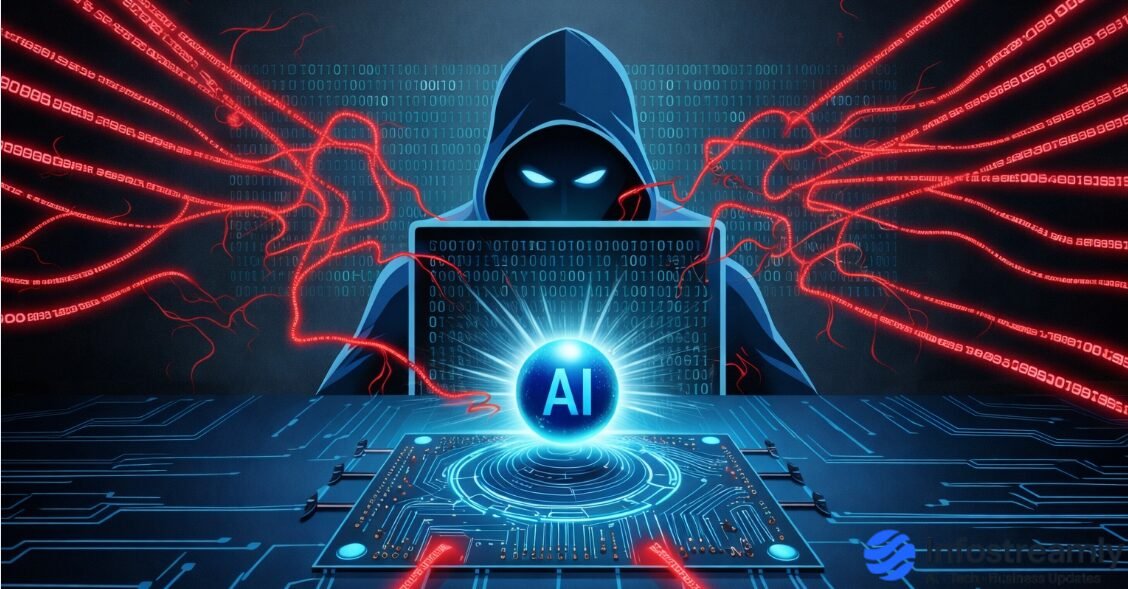

Protect Your Data from AI Scams — this is not just advice anymore; it’s a survival rule in the digital world.
AI has become powerful, fast, and extremely convincing. Hackers are now using AI to clone voices, generate deepfake videos, crack weak passwords, and trick people into revealing personal or financial information. What used to be simple “scams” have evolved into intelligent, automated attacks that can fool even tech-savvy users.
The good news?
You can stay safe — if you know what to watch out for and how to protect your online data.
This guide explains the biggest AI-driven threats and gives you actionable steps to secure your data in 2025 and beyond.
What Are AI Scams?
AI scams are cyberattacks created using artificial intelligence. Unlike traditional scams, these are faster, scalable, and extremely realistic.
Common Types of AI Scams
- Deepfake voice scams: AI clones a real person’s voice and asks for money or OTP.
- Deepfake video scams: Fake videos made to mislead people or hijack identities.
- AI phishing emails: Auto-generated messages that look 100% real.
- AI-powered social engineering: Hackers analyze your social media and create personalized attacks.
- AI malware: Malware that learns and evolves to bypass security systems.
Why AI Scams Are Increasing in 2025
1. AI Tools Are Easily Accessible
Even beginners can generate fake voices or emails using public AI tools. Hackers don’t need high technical skills anymore.
2. Social Media Oversharing
Hackers scrape your real posts, photos, and voice notes to create deepfakes or targeted scams.
3. Weak Cyber Hygiene Habits
Most people still use weak passwords, ignore security alerts, or share information without verifying sources.
4. Businesses Are Moving Online Fast
More digital data = more scope for AI-powered attacks.
Top AI Scams You Must Know in 2025
1. Voice Cloning Scams
A hacker can mimic your child’s or parent’s voice saying:
“I’m in trouble… send money fast.”
Realistic. Emotional. Dangerous.
How to Protect Yourself
- Always verify the call with a callback.
- Create a family safe word.
- Avoid posting voice notes online.
2. Deepfake Video Scams
Fake videos of you, your colleagues, or celebrities are used to mislead people or run investment scams.
Protection Tips
- Verify videos from official sources only.
- Enable two-factor authentication (2FA) to protect social accounts.
- Avoid sharing personal videos publicly.
According to the Europol Cybercrime Centre, deepfake-related cybercrimes have increased sharply in recent years, making it crucial for users to verify videos and sources carefully.
3. AI-Generated Email & WhatsApp Scams
Phishing emails today look exactly like bank, company, or Amazon messages.
The Cybersecurity & Infrastructure Security Agency (CISA) regularly warns users about advanced phishing attacks powered by AI and recommends verifying every suspicious email before responding.
How to Identify
- Unexpected payment requests
- Links asking for login credentials
- Grammar-perfect but urgency-heavy messages
Protection Tips
- Don’t click unknown links.
- Confirm messages via the official website/app.
- Use email spam filters and antivirus tools.
4. AI Password Cracking
AI tools can crack weak passwords in seconds.
How to Stay Safe
- Use a password manager
- Create strong passwords (12+ characters)
- Enable 2FA on all accounts
- Avoid using the same password everywhere
5. AI-Based Identity Theft
Hackers use your photos, voice, Aadhaar/PAN details, or email data to impersonate you.
Protection Tips
- Keep documents private
- Disable unnecessary app permissions
- Use privacy settings on social media
- Don’t share Aadhaar, PAN, or bank details on calls
10 Proven Ways to Protect Your Data from AI Scams (2025 Guide)
Below are the most effective and practical steps:
1. Enable Multi-Factor Authentication (MFA)
This is the strongest protection. Even if hackers crack your password, they can’t log in without OTP/biometric.
2. Use Strong Passwords & Password Managers
A password manager auto-generates strong passwords and stores them securely.
Best Free Options:
- Bitwarden
- NordPass
- Google Password Manager
3. Stop Sharing Excess Personal Information
AI tools collect your:
- Photos
- Voice
- Location
- Hobbies
- Contacts
- Old posts
Less information means fewer attack chances.
4. Verify Every Link Before Clicking
Check:
- URL spelling
- HTTPS security
- Official domains
- Sender identity
Banks will never ask for OTP via links.
5. Use Updated Antivirus & Anti-Malware Tools
Modern antiviruses can detect AI-powered attacks and phishing attempts.
Recommended:
- Microsoft Defender
- Avast
- Bitdefender
- Malwarebytes
6. Disable Unnecessary App Permissions
Apps often request:
- Microphone
- Camera
- Contacts
- Gallery
- Location
Turn off everything that’s not required.
7. Beware of Deepfake Audio & Video
Video is no longer proof of truth.
Check For:
- Strange blinking
- Unnatural lip movement
- Odd shadows
- Too-perfect voice
8. Secure Your Social Media Accounts
- Private mode
- 2FA
- Strong passwords
- Block unknown messages
9. Use Encrypted Messaging Apps
Prefer:
- Signal
- Telegram (secret chats)
End-to-end encryption protects you from interception.
10. Educate Yourself & Your Family Regularly
Scammers evolve fast — your knowledge must evolve faster.
Teach family members:
- Not to share OTP
- Not to panic on unknown calls
- To verify money requests
Conclusion
In 2025, AI scams have become smarter, faster, and more dangerous than ever before. But with the right knowledge, habits, and digital hygiene, you can confidently protect your data from AI scams and stay far ahead of cybercriminals.
Digital safety is no longer optional — it’s your responsibility.
Stay alert. Stay informed. Stay protected.
Final Verdict
AI scams will continue to grow, but your awareness can keep you safe. Every small step — a strong password, a verified call, a cautious click — reduces the hacker’s power.
Key Takeaways
- AI scams use deepfakes, voice cloning, and phishing to trick victims
- Never trust unknown calls, links, or messages
- Use MFA and strong passwords
- Reduce social media sharing
- Keep devices and antivirus updated
👉 Stay one step ahead of cybercriminals. Start applying these AI safety tips today and protect your data before it’s too late. For more cybersecurity guides, tutorials, and AI safety updates, explore our latest articles now.
More Insights:
- Top 10 Cybersecurity Threats 2025—From AI Hackers to Quantum Attacks
- Best Free Antivirus Tools 2025 – Top 10 Free Security Software for Your PC
FAQ Section
1. What is the biggest AI scam in 2025?
Voice cloning and deepfake video scams are the most dangerous.
2. Can AI steal my identity?
Yes, AI can gather your data from social media and create deepfake identities.
3. How do I protect my bank accounts?
Use MFA, avoid clicking unknown links, and verify calls directly with your bank.
4. Are antivirus tools helpful against AI scams?
Yes, modern antiviruses detect phishing, malware, and suspicious behavior.
5. Can AI crack passwords?
Weak passwords can be cracked in seconds. Always use 12+ character strong passwords.

Chandra Mohan Ikkurthi is a tech enthusiast, digital media creator, and founder of InfoStreamly — a platform that simplifies complex topics in technology, business, AI, and innovation. With a passion for sharing knowledge in clear and simple words, he helps readers stay updated with the latest trends shaping our digital world.